


For a long time, a penetration test meant booking testers for a week or two and then waiting for their report. AI pentesting changes that rhythm. It uses AI agents to find weaknesses in systems you’re authorized to test and prove which ones can be exploited, and it can run again whenever something changes.
The annual test still has its place, and AI doesn’t replace the judgment of an experienced tester. What the agents take on is the repeatable work of mapping what’s exposed, trying exploits against it and writing up the evidence. Your team decides what’s in scope, which findings matter to the business, and what gets fixed first.
Mandiant’s M-Trends 2026 report found that exploits were the most common way into a network for the sixth year running, accounting for 32% of intrusions. It also puts mean time to exploit at an estimated minus seven days, so on average the exploit now arrives about a week before the patch.
This guide covers how AI pentesting works, how it compares to manual testing, BAS and red teaming, and where its limits are. We’ll also look at how to govern it, what DORA, NIS2 and PCI DSS expect, and what changes for MSSPs. The compliance section isn’t legal advice.
Key Takeaways on AI Pentesting
- AI pentesting proves which weaknesses can be exploited and backs each finding with evidence someone else can reproduce.
- The biggest change is frequency, since any release, new asset or newly disclosed vulnerability can trigger a test.
- Formal tests such as DORA’s TLPT and PCI DSS Requirement 11.4 still call for qualified testers, and AI testing fills the time between them.
- A finding tells you what’s exploitable. The exposure window only closes once the risk is reduced and a retest shows the fix held.
What Is AI Pentesting?
AI pentesting, or AI penetration testing, uses AI agents to plan and run the steps of an attack against systems you’re authorized to test. Each finding comes with proof that it can be exploited.
That proof is what separates it from a vulnerability scanner. A scanner tells you a weakness might be there. An AI pentest tries to use it, the way a human tester would, and writes down what happened.
This guide is about agents that choose and run each step within a scope a person has set. Sometimes the name means something lighter, like a tester asking an AI model for help with a payload or a wall of tool output.
AI Pentesting vs. LLM Pentesting
The opposite job has almost the same name. AI pentesting uses AI to test your systems, while LLM pentesting and AI red teaming test the AI itself. They look for weaknesses like prompt injection and data leakage in a model or in an agent built on one.
The two share vocabulary and very little else. If the AI you’re worried about is your own, our guide to securing AI agents covers that side.
How AI Pentesting Works
An AI pentest moves through the same stages a human tester would. What changes is the pace, because the agent doesn’t wait for the next morning, or the next engagement, to keep going.
It starts with reconnaissance. The agents map what’s reachable inside the agreed scope. That covers domains, open services, web applications and the software behind them, including the old test server that never got switched off. Then they try to use what they find. Two low-severity issues that nobody would prioritize on their own can add up to a path to an admin panel or a privileged account.
Every confirmed finding should come with evidence someone else can reproduce, such as the request sent, the response that came back and the steps in order. If a finding can’t be reproduced, it shouldn’t go in the report. That one rule is what saves your team from chasing false positives.
The report gives each finding a severity alongside that evidence. And when your team ships a fix, the same test can run again that day to see whether it held.
AI Pentesting vs. Traditional Penetration Testing
None of this makes the manual pentest obsolete. The two differ in how often they run and where each one is strongest.
| Question | Traditional penetration test | AI pentesting |
|---|---|---|
| How often does it run? | A fixed schedule, often annual, and after major changes | Continuously, or whenever something material changes |
| What does it cover? | What the testers can reach in the days booked | Breadth across the agreed scope on every run |
| How does it handle business logic? | Well. A tester knows what the application is for. | Less well. Logic flaws need context an agent may not have. |
| Does it satisfy PCI DSS Requirement 11.4? | Yes, when qualified, independent testers run it | As supporting evidence between formal tests |
AI testing carries the breadth between engagements, and experienced testers go deep where context matters.
AI Pentesting vs. Automated Penetration Testing, BAS and Red Teaming
Five approaches tend to get grouped together, and each one proves something different.
| Approach | What it does | What it proves |
|---|---|---|
| Vulnerability scanning | Checks systems against known weaknesses and misconfigurations | That a weakness may be present |
| Automated penetration testing | Runs scripted checks and known exploit sequences | That a known exploit works on a given target |
| AI pentesting | Picks each step from what it finds and chains weaknesses | Which weaknesses can be exploited, alone or combined, with evidence |
| Breach and attack simulation (BAS) | Replays known attacker techniques safely against your controls | Whether your controls detect or block those techniques |
| Red teaming | People pursue a goal over weeks, like a real adversary | How the organization holds up against a determined attacker |
If BAS and penetration testing sound alike, it’s because both use attacker techniques. BAS checks whether your controls catch them. A pentest checks whether a weakness can be used to get in. The gap between automated pentesting and AI pentesting is smaller, and it comes down to whether a script or an agent chooses the next step.
Adversarial Exposure Validation (AEV) and CTEM
If your program follows Continuous Threat Exposure Management (CTEM), vulnerability scanning sits in the discovery stage. The other four belong to the validation stage, where you check whether an exposure can be used.
Gartner groups BAS, automated penetration testing and red teaming technology into one market, adversarial exposure validation (AEV). Its market definition describes them as “technologies that deliver consistent, continuous and automated evidence of the feasibility of an attack.” In its 2026 Market Guide, Gartner predicts that “by 2029, 60% of organizations will have adopted a structured exposure validation practice as part of CTEM, with AEV technologies and managed service providers serving as primary enablers.”1
Validation is the fourth of CTEM’s five stages. Mobilization comes next, and it’s where a confirmed finding becomes a change in your environment.
What Continuous Penetration Testing Changes
Continuous penetration testing runs a new test each time something material changes. An annual pentest is a snapshot. It shows your environment clearly on the day it ran, and then releases ship, new services go live and vulnerabilities get published in software you’ve run for years.
In the first half of 2026, Vulncheck found that nearly one in four of the known exploited vulnerabilities it recorded (23.43%) showed signs of exploitation on or before the day their CVE was published. So as time-to-exploit shrinks, the date of your last test matters less than what’s changed since.
Common triggers include a release, a new internet-facing asset, a newly disclosed vulnerability in software you run, and a fix. The last one is the easiest to skip. A fix that never gets retested leaves you with a closed ticket and no proof the path is gone.
The Limits of AI Pentesting
Knowing where AI pentesting stops makes its results easier to trust.
- Business logic: an agent can miss a flaw that only makes sense if you know what the application is for, like a discount code that stacks when it shouldn’t.
- False confidence: a clean report covers the scope and techniques that ran. It says nothing about what was left out.
- Unproven findings: AI models can produce findings that sound convincing and fall apart on inspection.
- Data handling: the agent sees your environment, and so may the provider of any AI model it uses. Where that data goes belongs in the contract.
These limits are the reason people still set the rules and make the final calls.
How to Govern AI Pentesting in Production
The rules people set for a penetration test are called rules of engagement, and an AI agent needs them as much as a human tester does. It can end up with the same kind of access as a contractor with admin rights, so the rules are agreed in writing before anything runs.
| Rule | What it covers |
|---|---|
| Scope | Which assets, networks and applications are in bounds |
| Safe techniques | What can run against production and what waits for a maintenance window |
| Blast radius | Limits on load, data access and changes, so a test can’t take a service down |
| Stop control | One way for your team to halt everything at once |
| Evidence standard | Nothing marked confirmed without a reproducible signal behind it |
| Audit trail | Every action the agent took, in order, kept after the test ends |
| Cleanup | Anything the test created, like accounts or files, removed afterwards |
Within those rules, your team chooses what the agent runs on its own and what waits for a person to approve. A test that writes to a production database is an obvious one to hold back. Governed means the agent moves quickly inside limits your team set, and every step can be checked afterwards.
AI Pentesting and Compliance: DORA TLPT, NIS2 and PCI DSS
Regulators set rules for who runs the formal tests and how. NIS2 doesn’t require penetration testing by name. It asks for “policies and procedures to assess the effectiveness of cybersecurity risk-management measures” in Article 21(2)(f), and continuous testing gives that assessment dated evidence to draw on. Our guide to NIS2 and DORA compliance requirements covers both.
DORA and Threat-Led Penetration Testing (TLPT)
Under DORA, financial entities other than microenterprises need a resilience testing program, and Article 25 lists penetration testing among its tests. Article 26 then requires the entities that competent authorities identify to carry out threat-led penetration testing (TLPT) on live production systems at least every three years.
Under Article 27, testers need proven expertise in threat intelligence, penetration testing and red team testing. They also need professional indemnity insurance. DORA’s technical standards for TLPT have been in force since July 2025. They add minimum years of experience and an active red team phase of at least 12 weeks. That’s three months of a red team working against your live systems. TLPT is modeled on the ECB’s TIBER-EU framework, and the UK’s equivalent for financial firms is the Bank of England’s CBEST.
AI testing doesn’t change who runs that exercise. What it can do is keep your evidence current in the years between exercises.
PCI DSS Penetration Testing (Requirement 11.4)
PCI DSS applies wherever payment card data is stored, processed or transmitted, so it reaches well beyond Europe. Version 4.0.1 requires internal and external penetration tests at least once every 12 months and after any significant infrastructure or application change. They can be run by qualified internal or external testers with organizational independence, and exploitable findings get fixed and retested.
AI testing fits around that requirement. It covers the months between annual tests and can check each fix on the day it ships.
AI Pentesting for MSSPs
For an MSSP, continuous testing changes what you can offer. A one-off engagement becomes a recurring service. Every client gets the same scope rules, report format and evidence standard, and each client’s data stays separate.
That Gartner prediction names managed service providers as a primary enabler.1 And if you’re an MSSP in the EU, the NIS2 implementing rules name you directly. They ask managed and managed security service providers for security tests run to a documented methodology.
Automation is what makes multi-tenant security operations work, because one team can test more client environments to the same standard.
What Happens After an AI Pentest Finding
An AI pentest tells you something you didn’t know yesterday. But a finding is only advice until someone acts on it, and we describe that gap with one equation.
Exposure Window = Time-to-Exploit − MTRER
Time-to-exploit is how long attackers take to use a vulnerability, counted from its patch release. MTRER, or Mean Time to Reduce Exploitable Risk, is a metric we developed. It measures how quickly a team reduces the usefulness of a specific attack path, whether a patch is available or not.
Reducing the risk can mean a patch that goes through your next change window. It can also mean a faster control while the patch waits, like narrowing an account’s access, adding a firewall rule or isolating a service. Either way, the work ends when a retest shows the path is closed. Closing the ticket comes after that.
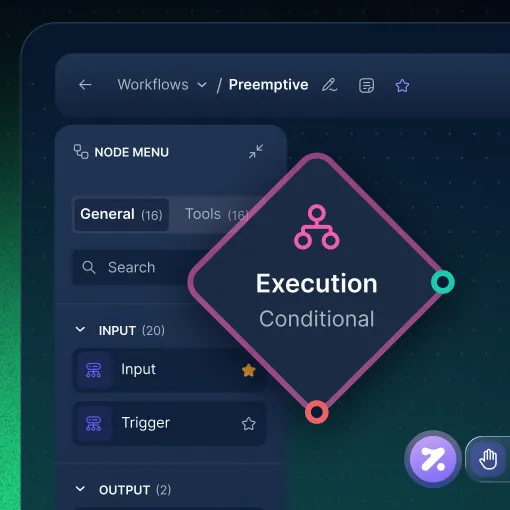
Acting on a validated exposure before anyone uses it is the idea behind preemptive cybersecurity. It’s also why we built Zynap. Our AI agents and human-governed workflows discover what’s exposed, validate what’s exploitable and reduce it on the stack you already own.
If you’d like to see how we validate and reduce exposure on a live environment, we’re happy to show you.