Zynap recognized by Gartner® as a Sample Vendor for Preemptive Exposure Management in the Gartner Agentic Security Report. Read more!
Product
Platform
The Preemptive Cybersecurity Platform
Zynap has intelligence on 900+ threat actors and campaigns,
Products
NINA AI
Context-aware agents for SecOps
Threat Intelligence
Threat Intel for preemptive cybersecurity
Automation & Workflows
Automation built for cybersecurity
Malware Analysis Sandbox
Kernel-level analysis with indicators to act on
Credentials Intelligence
Credential exposure automatically validated
More
Integrations
Connect your tools
MSSPs
Enterprises
Resources
Blog
Insights, investigations and updates
Knowledge center
Ebooks, guides, videos & more
Newsroom
News and media announcements
Company
About Us
What we’re building
Careers
Join us! We’re hiring
Contact
Talk with our team
Mythos
Login
Book a demo
A vendor's security can change the day after you assess them. This guide covers what Third-Party Risk Management (TPRM) is, how continuous exposure monitoring keeps up with that, and what...
Cyber Risk Quantification measures your cyber risk in money, so your security posture becomes a single number instead of a subjective rating. CRQ is a figure your board can fund...
A plain-English guide to NIS2 and DORA for security teams. See what each regulation requires, where they overlap, and how to cover them together, whether you secure one organization in-house...
La Ley 21.663, la Ley Marco de Ciberseguridad, es la ley nacional de ciberseguridad de Chile. Fija obligaciones de ciberseguridad para los organismos del Estado y para las empresas privadas...
Chile's Ley 21.663, the Ley Marco de Ciberseguridad, is now in force, and it requires operators of essential services to report a serious incident within three hours. Our guide covers...
Preemptive cyber operations describes a shift, from reacting to threats to getting ahead of them. Written for MSSPs and enterprise security teams, this guide covers what the term means, how...
Subscribe to The Zynapse Newsletter
Exclusive threat intel, underground market analysis, and security insights from Zynap’s research team. All the intel you need, without the noise.
GDPR, CCPA, and Latin America's new laws all lean on the same security foundation. This is what data privacy compliance asks of a security team, where the regimes overlap, and...
Gartner expects quantum computing to make today's asymmetric cryptography unsafe by 2029. The EU has set an earlier deadline, a cryptographic inventory by the end of 2026, and most security...
A negative SEO attack flooded our site with spam backlinks. Here’s how we detected it, disavowed at scale, and automated a preemptive defense.
Gartner calls active deception, alongside denial and disruption, a non-negotiable part of preemptive cybersecurity. This is what cyber deception is, how it works, and what it changes for MSSPs and...
You can probably say how fast your team spots a threat and how fast it responds. The quieter number, how long it takes to reduce an exploitable risk once you've...
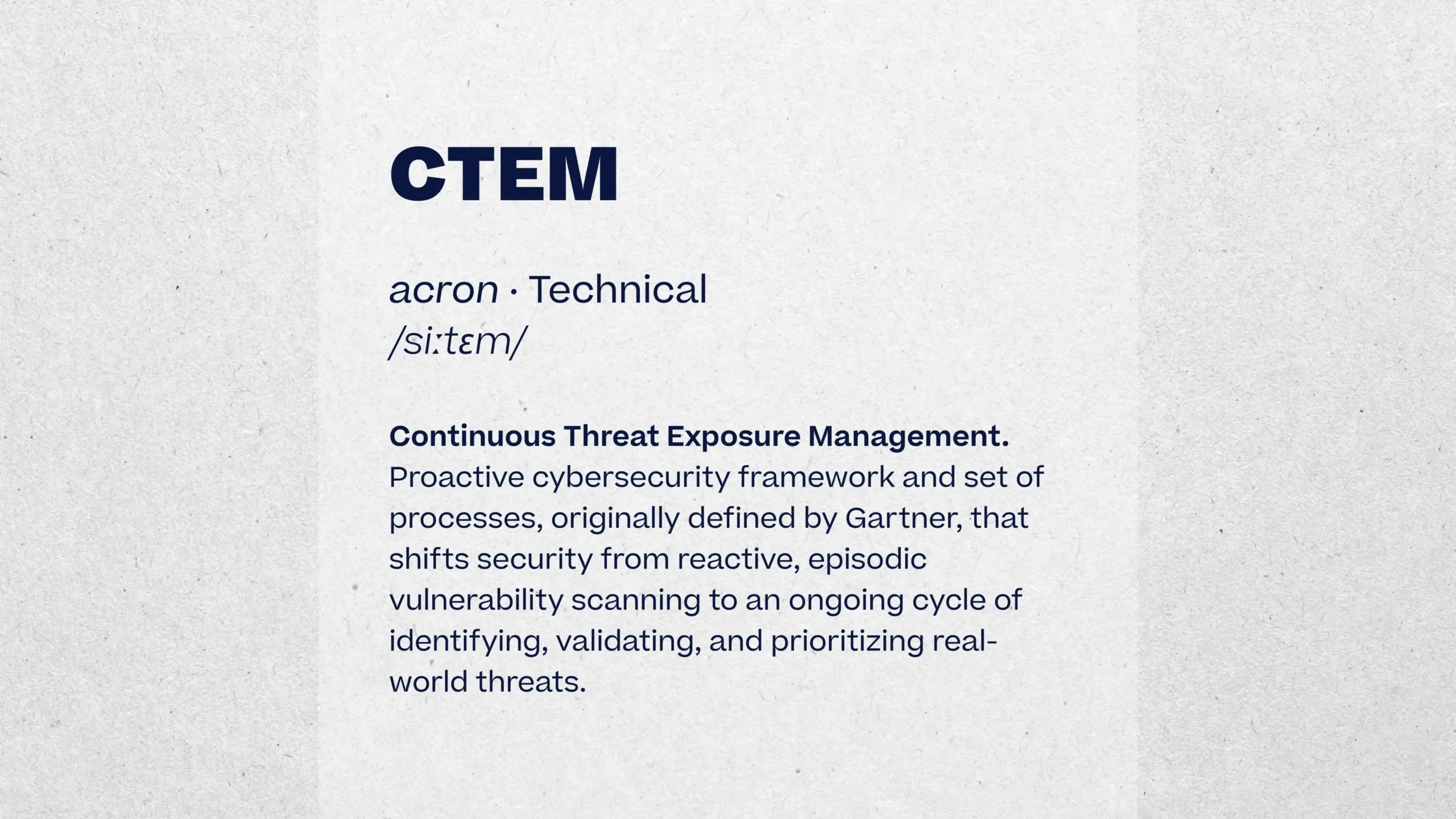
Most security teams know what's exposed. What's harder is deciding what to do about it, in the right order, fast enough to matter. This is a guide to CTEM, the...
1 2 3