Product
Platform
Products
More
Resources
Company
Product
Platform
Products
More
Resources
Company
Product
Platform
Products
More
Resources
Company
Mythos didn't create a new problem. It revealed a structural problem that’ll only get worse with the next frontier models. Discovery, validation and exploitation now run at machine speed. Most defense still runs at the speed of tickets. Closing that gap isn't a feature, it's a discipline: Preemptive Cyber Operations.

 The collapse of offensive time
While the defensive calendar hasn't. The real question was never how impressive a model looks. When central banks and regulators react to a model release within weeks, the debate stops being technical. It's about asymmetry, preparation, and whether you can respond in time.
28.3%
of exploited CVEs
are weaponized within 24 hours of disclosure.
Mandiant M-Trends 2026
22sec
average hand-off
from initial access to a secondary actor in 2025.
Mandiant M-Trends 2026
50%
of security spending
expected to be preemptive by 2030, from under 5% today.
Gartner, 2026
The shift
The economics of attack have changed. Mapping an attack surface, chaining weaknesses and exploiting them all got far cheaper and faster. Reacting after an attack no longer keeps pace with the most advanced AI models.

AI compresses the attack cycle
Discovery, validation & exploitation now run at machine speed.
Time-to-exploit collapses
What used to take years now takes hours.
Your exposure window widens
The period in which a vulnerability is exploited keeps growing.
Preemptive Cyber Operations
The discipline that shrinks that window on your live environment.
How the industry got here
Security has seen three waves of AI. Only the last one keeps up with the attacker's clock.
AI that answers
Assistants that summarize, explain and draft. Useful, but they only observe. The human is still the bottleneck, now with a faster narrator.
AI that reacts
Playbooks and orchestration that fire after the alert, the SOAR generation. It compresses MTTR, but the exposure that caused the alert stays untouched.
AI that acts before
Operational intelligence, adversarial validation and governed action on your live environment, before the exploit is operationalized, not after the alert. Closing the exposure window is a different problem from closing tickets.


By 2029, 30% of organizations will link adversarial-validation results directly to automated remediation workflows
From Gartner: Market Guide for Adversarial Exposure Validation, March 2026
How Zynap acts first
Your stack is still detecting, scoring, and handing the risk back to you. Zynap is running Preemptive Cyber Operations end to end, on your live environment.
DETECT → PRIORITIZE → RECOMMEND
Then it hands you a ticket, a dashboard, a plan. You're left with advice, while the exposure and the open window stay yours.
UNDERSTAND → VALIDATE → REDUCE → VERIFY
Zynap owns the outcome. An exploitation path proven dead on your live environment, with evidence, under governance, fully traceable.
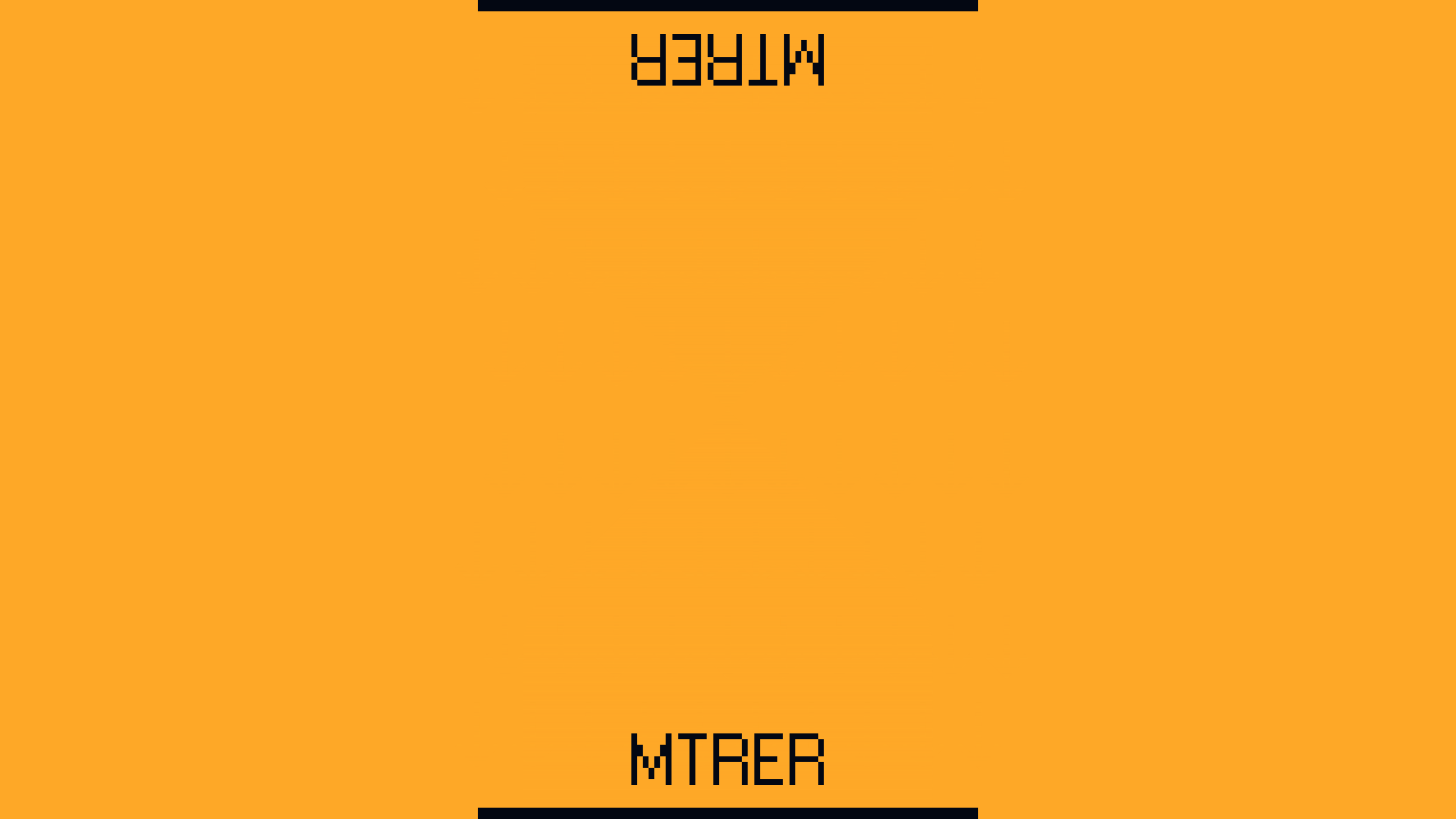
Mean Time to Reduce Exploitable Risk
Blind Time runs until you know. Action Time runs until it is closed. Most metrics only measure the second. Zynap proposed, not an industry standard. The open specification is a working draft.
MTRER = Blind Time + Action Time
Inside the platform
One operational layer on top of the stack you already own: unifying threat intelligence, exposure management, offensive validation and governed remediation. Six capabilities that compress the window:

Intelligence wired directly to exposure, identities and live workflows instead of isolated feeds or static reports.

Intelligence that doesn't stop at informing: it prioritizes, validates, orchestrates and acts.

Governed patching where possible; immediate compensating mitigation where it isn't.

Every action traceable, auditable, reversible and policy-controlled: DORA, NIS2 and AI Act ready.

Vendor and LLM-agnostic by design; your existing tools unified into one operational system.

Measured in remediation time compressed and exploitable risk reduced. Threats neutralized before impact.
 NEW!
NEW!
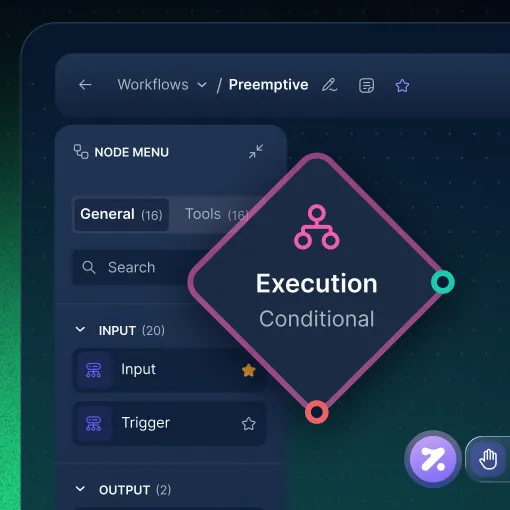
NINA's agents investigate threats, validate exposure, orchestrate remediation and act on the live environment with full operational context. Not a chatbot but an operational layer for machine-speed defense.
Why it's inevitable
Mythos is here to stay, and more advanced models will follow. Three cracks are already open, but you can't fix any of them by reacting.

A dozen tools, none coordinated. When offensive time compresses, those gaps stop being an inefficiency and turn into a risk.

Delegate to AI without validating it, and teams produce more but understand less. When it counts, they respond worse.

Machine identities already outnumber humans. The fastest path to your data is the forgotten token, not the endpoint.
Myths
The shift is real. Drop these four, and you can get ahead of it instead of fearing it.
AI is replacing defenders
Automation is the future
Detection is getting better
Cybersecurity has an AI problem.