Product
Platform
Products
More
Resources
Company
Product
Platform
Products
More
Resources
Company
Product
Platform
Products
More
Resources
Company

Real-time financial sector threat intelligence and actor tracking

AI-powered transaction monitoring and anomaly detection

Automated response for financial fraud and attack detection

Monitor compromised financial credentials and dark web activity
H1 2026 moved the financial sector’s threat center of gravity from encryption to exfiltration. Of the 692 incidents recorded between January and June, 490 were data breaches and exfiltration events. Attackers increasingly reached institutions through the vendors, payment rails, and front ends they depend on rather than through the perimeter itself.
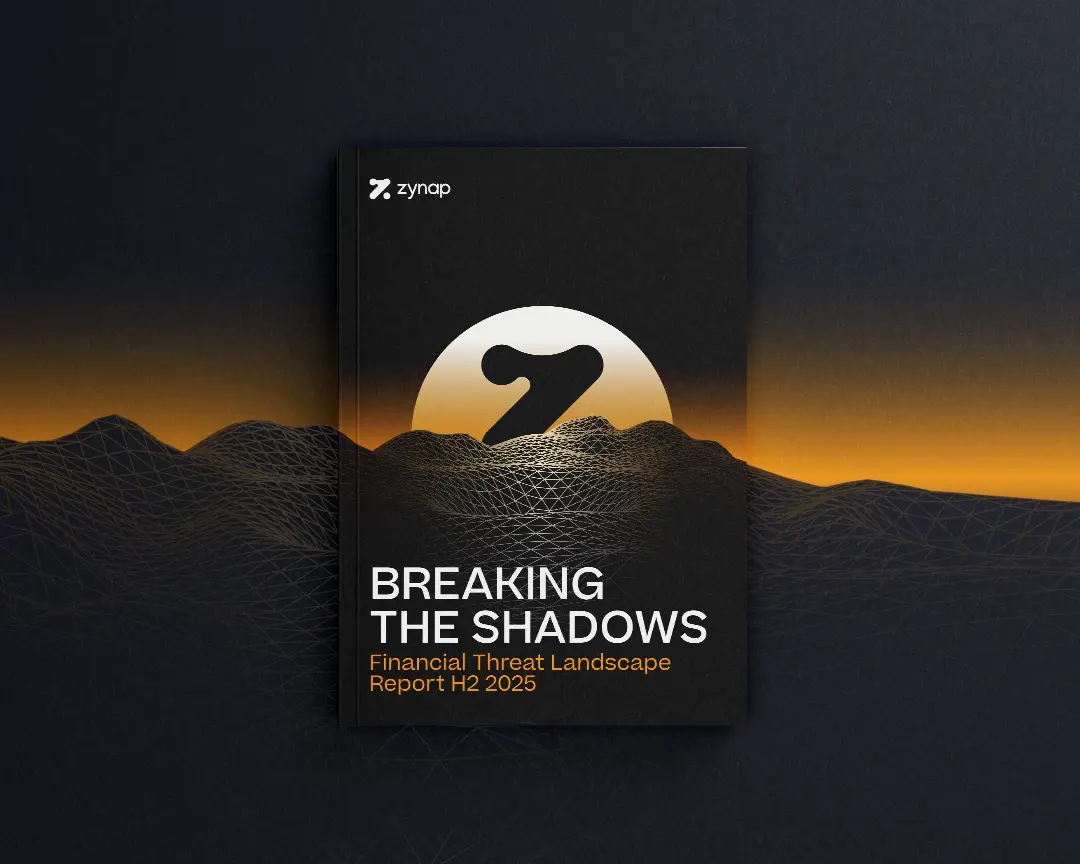
Download the full report now!
490 of 692 recorded incidents were data breaches and exfiltration events, against 267 ransomware incidents. ByteToBreach alone pulled 3TB of S3 data from Remita and exposed 900,000 Sterling Bank accounts. For regulated institutions, stolen client data triggers supervisory scrutiny long before any system goes offline. Understand why your detection priorities may be calibrated to the wrong outcome.
Financial and payment system attacks accounted for 150 incidents. GnosisPay lost funds to a signature verification exploit. Polymarket wallets were drained through a compromised front end. United Bank for Africa faced ATM fraud combining supply chain compromise, insider access, social engineering, and credential theft in a single chain. See what defending the transaction layer actually requires.
ShinyHunters and Storm-1567 each ran 18 incidents, DragonForce 17, The Gentlemen 14. Their geographies overlap heavily across the United States, Canada, and Western Europe, and their methods converge almost completely on ransomware paired with exfiltration. Learn how a small, high-tempo set of adversaries shapes sector risk, and which behaviors to prioritize in detection.
RipperSec and Conquerors Electronic Army operate purely in DDoS and service disruption, the latter targeting Israel exclusively. APT73 combines financial system attacks with ransomware in a pattern consistent with state sponsorship. Financially motivated groups behave differently again. Understand why one defensive posture cannot cover disruption, extortion, and state-aligned operations at once.
SharkLoader arrives disguised as Cisco AnyConnect and Google Update installers. Fake Claude Code installation pages deliver fileless .NET infostealers. AI-built ransomware toolkits now automate Active Directory discovery and EDR evasion. On mobile, BeatBanker targets banking apps, Pix payments, and crypto wallets through counterfeit app stores. See what this demands from endpoint controls and user awareness.
CVE-2026-56290 allows unauthenticated arbitrary file upload in Joomla Page Builder CK, scoring 9.8 with a public proof of concept, confirmed exploitation in the wild, and CISA Known Exploited Vulnerabilities listing. Nine further CVEs across Exchange Online, Jenkins, LiteSpeed, Langflow, libssh2, and Tomcat complete the period's priority set. Know exactly where to direct patching effort first.
The period's shape in brief: 692 incidents, 267 ransomware events, and the dominance of data breaches and exfiltration at 490 recorded cases. Identifies the most active threat actors, the malware families sustaining their campaigns, and the single vulnerability demanding the most urgent attention, with forward guidance on where sector risk is heading through the rest of 2026.
Analysis of 692 incidents across banks, payment processors, insurers, crypto platforms, and accounting firms. Breaks down attack types from exfiltration and ransomware through payment system, credential-based, and social engineering attacks. Maps geographic concentration, with 373 incidents in the United States ahead of Canada, the United Kingdom, and India, anchored to a timeline of the period's most consequential events.
Profiles of the groups that defined H1: ShinyHunters and Storm-1567 at 18 incidents each, DragonForce at 17, The Gentlemen at 14, alongside Coinbase Cartel, APT73, and RipperSec. Covers each group's geographic focus and preferred techniques, and separates financially motivated operators from hacktivist collectives and actors showing state-sponsored characteristics.
Dominant families including XRat, HVNC, RemusStealer, SpySolr, GoFlateLoader, NetSupport Manager RAT, and RedLine Stealer, plus campaigns tied to GOLD PRELUDE, Red Menshen, and MUMMY SPIDER. Covers fake software installers, AI-themed lures, steganographic Remcos RAT delivery, tax season phishing chains, and Android banking malware such as BeatBanker, with defense implications mapped to each.
267 incidents against financial organizations, set against the 692 total and the 150 payment system attacks recorded in the same period. Covers which groups deployed ransomware against financial targets, how consistently they paired encryption with exfiltration across the United States, Canada, and Western Europe, and what Ransomware-as-a-Service plus double and triple extortion mean for backup, segmentation, and response planning.
The vulnerabilities driving attacker focus against financial targets in H1 2026, led by CVE-2026-56290 in Joomla Page Builder CK at CVSS 9.8. Also covers Microsoft Exchange Online, Jenkins, LiteSpeed cPanel, Langflow, libssh2, and three Apache Tomcat bypasses. Each entry carries CVSS score, severity, patch date, and exploitation evidence including public proof of concept availability and CISA catalog status.