


A letter from the founders · Dani Solís & Oriol Agustí
Right now, it’s speeding up again. And AI is already making attacks faster, cheaper and easier to scale.
It’s also an unfair fight. Defenders play by the rules, and there are a lot of them: regulation, compliance, process, budget and the need to be precise. Cybercriminals? They skip all of that, reinvest their profits, recruit talent and buy whatever access and tools they’re missing. No approval committee required.
And the data shows how fast they’re moving. Mandiant’s M-Trends 2026 report tracks the time between an attacker getting in and handing that access to the group that will exploit it. In 2022, the median was more than eight hours. By 2025? 22 seconds. Most of what defense runs on, from the ticket to the change calendar to the risk committee, was built for those eight hours.
Why defense has to change
Today, if we’re honest, too much of cybersecurity is still reactive. Teams juggle too many tools and too many alerts, they make decisions without context, and they do by hand the work their systems were supposed to do. We’ve seen great security teams burn their best hours fighting their own stack while the attacker just kept moving.
Where do those hours go? Mostly into the space between tools. Intelligence sits in one place, exposure management in another and automation in a third, so every handoff costs time, and time is now the risk.
So defenders need to act sooner and close the window an attacker is counting on before anyone can use it. That’s what active defense means to us: reducing exploitable risk before impact, with your team in control of every decision that matters.
Where Zynap comes from
Rewind to Blueliv, the company we built before Zynap. Back then, the idea was simple: defenders were fighting blind, and they needed to see the attacker. We turned that idea into one of Europe’s threat-intelligence pioneers, and Outpost24 (then backed by Monterro, and later acquired by Vitruvian Partners) went on to acquire us.
But what we learned there mattered more than what we built. Seeing the attacker, it turned out, was only ever half the problem. Over and over, the intelligence about the attacker sat in one place, while the reality of the business, its environment, its exposure and its priorities, lived with different teams, in different tools and in different people’s heads. The data was there and so were the products, but the two halves never met, so the action never came.
Customers had three or four intelligence feeds and still didn’t know what to do with them beyond pasting reports and IOCs. Everything depended on what the analyst already happened to know. A report that sits in a drawer protects no one, and intelligence you don’t act on fast is just a record of what you failed to prevent.
Yet for years the industry kept adding layers to the same broken model, and every new dashboard, alert, feed, TIP and SOAR was designed for a way of working that no longer exists. Now it’s AI’s turn, and, well, a copilot on top of chaos just automates the noise.
We don’t believe in AI for show, or in one more assistant telling you what you already know. AI only earns its place when it makes security better, and that takes redesigning the work itself, so defenders get more context, speed, precision and control, and the power to act before the damage is done.
It all starts with context, and security runs on two of them. The first is the attacker’s: who’s targeting you, what they’ve stolen and what they can exploit. We know that one first-hand, because it’s where we started, and we still build our own intelligence today. The second is yours: your environment, your exposure, your dependencies and your business priorities, and nobody knows it better than your own team. Today the two still live apart, and every decision loses time and precision crossing that gap.
What we’re building
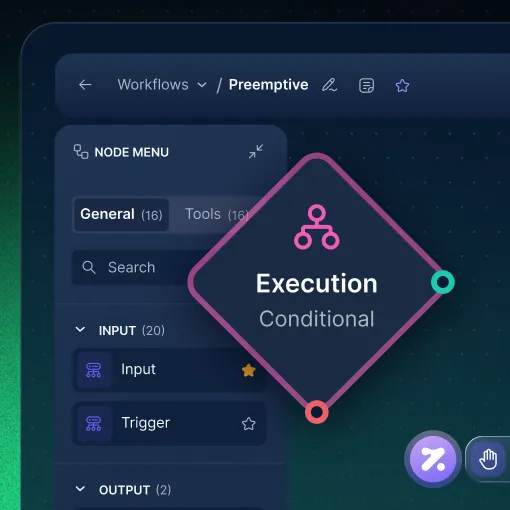
Zynap exists to close that gap. It takes what you know about the attacker and what you know about your own business, brings the two together, and acts before an exposure turns into an incident. We call it a preemptive cybersecurity platform, and in practice that means one operational layer on top of the stack you already own, where threat intelligence, exposure management, offensive validation and remediation finally work as one. Doing the actual work is NINA, our multi-agent engine.
Zynap owns every step, from the first signal to the move that closes the exposure window before anyone gets to use it. Along the way, it works out what the signal means for your exposure and helps you decide what to stop now, what can wait and which assets matter most. Getting all of that done in time is the hard part, and it’s also the whole point.
A copilot would stop at advice and leave the rest to you, so Zynap works as an autopilot instead. And who’s in charge? Well, you are. You set the limits and decide where it has to stop for approval, and inside those limits it acts and records everything it does. That’s what takes weight off good people, so your team can validate risk faster, focus on what actually matters to your business and act earlier. (And we won’t ask you to rip anything out to get there.)
In the end, the future of cybersecurity will be won by whoever turns intelligence into action faster than the attacker turns opportunity into impact.
That’s the shift we’re building for.
From reactive to preemptive.
From isolated tools to active defense.
From noise to context.
From context to action.
From knowing to doing.
Why we do this
For us, this is personal. We’ve been close enough to see exactly where the market breaks, and to know how many hours brilliant people lose stitching context together by hand while attackers get faster every single year. So, no, we’re not interested in building one more cybersecurity company that makes the stack look modern and leaves the problem untouched.
What we want instead is a team that shares a mission, since that’s what great security companies are built on. That means using technology to protect and to build, never to abuse it, and doing our best work while we keep raising the bar. It also means sharing what we know and having each other’s backs, because building something that matters always comes before anyone’s credit. Without that, well, none of the rest holds up. And if security teams across our industry don’t work together, the attackers win. It’s that simple.
So we stand with every defender, whether they sit in-house or at an MSSP, because cybercrime will keep scaling the way any profitable industry does and AI keeps shortening the time it needs to strike. Against that, defense can’t afford to stay reactive, and that’s why we built Zynap.
So this is where we stand: with the defenders. Because cybercrime isn’t slowing down. It’s scaling. And with AI, it’ll scale faster.
And this is our mission: to help defenders outsmart cybercrime before impact.
Let’s get there before they do.
Dani Solís & Oriol Agustí
Cofounders, Zynap